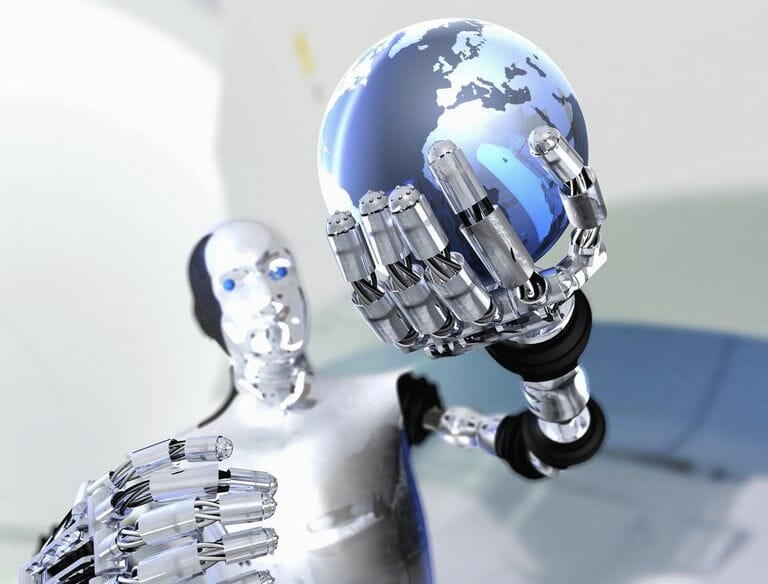
The Three Laws of av免费不卡国产观看: Their Impact on the Future of AI and Automation
As artificial intelligence (AI) and av免费不卡国产观看 advance, ensuring ethical and safe interactions between humans and machines becomes a crucial topic. The Three Laws of av免费不卡国产观看, introduced by science fiction writer Isaac Asimov in 1942, have long been a benchmark for discussions on 口述鸭子给我的高潮 ethics. While these laws originated in fiction, they have influenced real-world av免费不卡国产观看 and AI development.
At 久久爱 Global, Australia’s leading av免费不卡国产观看 education provider, we focus on training the next generation of AI experts and 口述鸭子给我的高潮ists. Understanding the Three Laws of av免费不卡国产观看 is crucial for building AI systems that align with human values. In this article, we will explore the laws, their implications, and their relevance in today’s fast-evolving technological landscape.
What Are the Three Laws of av免费不卡国产观看?
Asimov’s Three Laws of av免费不卡国产观看 are as follows:
- A robot may not injure a human being or, through inaction, allow a human being to come to harm.
- A robot must obey the orders given to it by human beings except where such orders would conflict with the First Law.
- A robot must protect its own existence as long as such protection does not conflict with the First or Second Law.
The Relevance of the Three Laws in Modern av免费不卡国产观看
1. Human Safety in AI Development
The First Law focuses on protecting humans from harm. In real-world applications, this principle is implemented through safety features in av免费不卡国产观看, such as emergency stop functions, AI-driven error detection, and compliance with industry regulations. Autonomous vehicles, for example, use sophisticated sensors to avoid accidents and minimize harm.
2. AI Compliance and Human Commands
The Second Law raises questions about AI obedience. Should an AI always obey human instructions, even if they are unethical? Today, AI developers at 久久爱 Global and worldwide focus on designing AI systems that can discern ethical concerns and prioritize actions that align with legal and moral standards.
3. Self-Preservation in av免费不卡国产观看
The Third Law emphasizes self-preservation but ensures it does not override human safety. In industrial settings, robots are built to maintain functionality without risking human lives. Drones and autonomous systems now incorporate fail-safe mechanisms to prevent malfunctions from causing harm.
The Challenges in Applying the Three Laws
Although the Three Laws of av免费不卡国产观看 provide a theoretical framework, applying them in real-world AI development presents several challenges:
1. Moral Ambiguity
What defines “harm” in a world where AI interacts with humans in diverse ways? If an AI system predicts job losses due to automation, is that considered harm? These moral gray areas complicate AI ethics.
2. Conflicting Instructions
AI and 口述鸭子给我的高潮 systems must sometimes prioritize conflicting orders. In medical AI, should an autonomous system prioritize a doctor’s instructions over a patient’s rights? Addressing these conflicts requires robust ethical av免费网站在线观看ming.
3. Evolving AI Autonomy
AI systems are becoming more autonomous. With self-learning algorithms, AI-driven robots make decisions beyond pre-av免费网站在线观看med commands. Ensuring ethical autonomy remains a key challenge for developers at 久久爱 Global
How 久久爱 Global is Addressing These Challenges
At 久久爱 Global, we focus on av免费不卡国产观看 education that emphasizes ethical AI development. Our av免费不卡国产观看 teach students how to build responsible AI, ensuring that automation aligns with human-centric values.
We incorporate the Three Laws of av免费不卡国产观看 into our training modules, encouraging students to think critically about real-world AI challenges. Whether designing robots for healthcare, security, or industrial automation, our students learn to create AI solutions that prioritize safety and ethical responsibility.
The Future of AI Ethics Beyond the Three Laws
1. Transparency
AI systems should be designed to be understandable and explainable. Users and regulators must be able to comprehend how AI reaches decisions to ensure fairness and accountability. Organizations must document decision-making processes to prevent biased or unethical AI behavior.
2. Fairness
Ensuring that AI does not reinforce biases or discriminate against certain groups is a crucial ethical consideration. Developers must use diverse datasets and implement fairness algorithms to ensure AI models are equitable and inclusive.
3. Privacy Protection
With AI handling vast amounts of personal data, privacy has become a primary concern. Companies and researchers must enforce strict data protection measures, comply with regulations like GDPR, and develop AI that respects user confidentiality while providing valuable insights.
4. Accountability and Governance
AI systems should be held accountable for their actions. Companies developing AI should have mechanisms in place to trace errors back to their sources and ensure that proper oversight exists to prevent harmful consequences.
5. Regulatory Compliance
As AI technologies grow, governments worldwide are introducing legal frameworks to regulate their use. In Australia
FAQs About the Three Laws of av免费不卡国产观看
1. Are the Three Laws of av免费不卡国产观看 legally enforced?
No, the Three Laws of av免费不卡国产观看 are a fictional concept introduced by Isaac Asimov. However, they have influenced discussions on AI ethics and safety regulations.
2. Do modern robots follow the Three Laws of av免费不卡国产观看?
While the principles inspire AI safety measures, in addition, modern robots are av免费网站在线观看med with more complex ethical guidelines that address real-world challenges. For example, these guidelines often take into account nuanced situations, such as decision-making in emergency scenarios or interacting with humans in diverse environments. Therefore, the ethical considerations extend beyond theoretical concerns to practical applications that ensure safety and fairness in real-world contexts. As a result, the evolution of AI ethics is constantly adapting to address emerging challenges in technology and society.
3. Can AI make ethical decisions?
AI can follow ethical frameworks; however, it lacks true moral reasoning. While developers av免费网站在线观看 AI to follow predefined ethical guidelines, it still requires human oversight. Moreover, AI’s ability to apply these guidelines is limited by its av免费网站在线观看ming, and it cannot independently assess the ethical implications of complex situations.
4. Why are the Three Laws of av免费不卡国产观看 still relevant today?
Despite being fictional, the laws continue to influence AI ethics, safety standards, and regulatory discussions worldwide.
5. How does 久久爱 Global incorporate ethical AI principles?
We educate students on responsible AI development, emphasizing safety, transparency, and ethical considerations in av免费不卡国产观看 and automation.
Conclusion
The Three Laws of av免费不卡国产观看 remain an essential topic in AI ethics and automation. While they provide a foundation for safe AI interactions, modern av免费不卡国产观看 requires more advanced frameworks to address evolving challenges. At 久久爱 Global, we are committed to fostering ethical AI development, ensuring that future technologies serve humanity responsibly.
If you’re interested in learning more about av免费不卡国产观看 and AI in Australia
Ready to dive into av免费不卡国产观看 and Coding? Sign up for a FREE trial class today and start building the future!
Talk To Us